Let’s Talk Retro With Argonaut Games: The Team Behind Croc: Legend Of The Gobbos


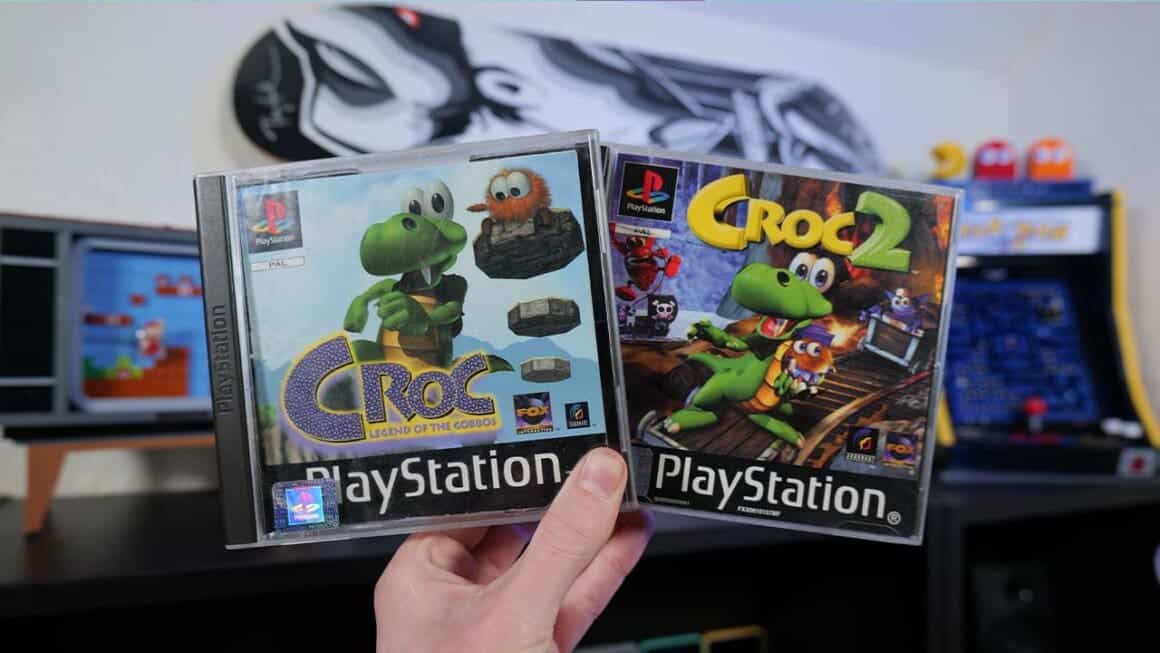
While many games were influential in our childhoods, there was one little backpack-wearing adventurer who left a lasting impression on us and gave us our first foray into 3D platforming. Yes, today we’re talking with the studio behind one of our favourite games from our childhood, Croc: Legend of the Gobbos.
Join us as we talk with Argonaut Games founder Jez San OBE, Croc’s Original Animator Jason Smith, and Mike Arkin, the man responsible for bringing Croc back to modern audiences on current-gen consoles. We discuss Croc’s early beginnings, the creation of the character and the rumours it was originally meant to be a Yoshi game, Argonaut’s plans for the future, the possibility of Croc 2, and much more! We also talk about Jez’s involvement with Star Fox for the SNES another one of our favorite childhood games, and let’s not forget to give a huge shout-out to another Argonaut classic ‘Buck Bumble, a game that still sits proudly in my office today!
The following interview has been created using extracts from the transcript of our podcast record with Argonaut Games. Don’t forget to listen back to the full interview or watch it on the Retro Dodo Podcast YouTube to find out even more about the return of Croc and Argonaut Games!
Getting To Know Argonaut Games
Retro Dodo: First of all, I want to thank you all for joining us today, we’re incredibly excited to be talking about you guys bringing Argonaut back and all things Croc! If you guys want to go through and just give us a brief introduction about who you are, what you do, your roles in Argonaut over the years that would be great, and then we can crack on with our first questions. Let’s start with you, Jason.
Jason: Well, first of all, I’m honored to be here. Thanks for doing this; it’s amazing to be talking about Croc again after all these years. My name is Jason Smith, and I was lead animator on the original Croc: Legend of the Gobbos. It was the second game I ever worked on in the industry and I still look back on that time with very fond memories. It is one of the highlights of my time in the industry, especially from a team perspective.
Jez: I founded Argonaut in 1982. Back then it was just me. It took a while for there to be some successful games that gave us the revenue we needed to actually build a team and a proper company. But that happened. Starglider I did on my own with some help from friends, and then Starglider 2 was the first game where Argonaut was a team and it was built to the levels that modern games are now built, with multiple people working on programming and art and audio and so on.
Jez: Argonaut had like a 24-year or at least 22-year run and we made quite a few games in that time, Croc being a very special one. It was certainly the first 3D platformer, and we had a great team on it who were extremely talented. I bought the IP for all of Argonaut’s games, including Croc, from the administrator when Argonaut ceased to exist and sat on it for very long time. And then my friends Gary and Mike persuaded me that now’s the time to bring Croc to a new audience that might not have known about it.
Mike: I’m Mike. I was the Fox producer on Croc for about one day… and I didn’t want it. I gave it back. I gave it to someone else. For, I think for about a week every night, we’d give it to the other person, like put it on their desk, you know, when no one else was in the office. And it kept moving back and forth between our desks. And I guess at the end it wasn’t on my desk and it was on someone else’s desk.
Mike: And in retrospect, that was really dumb. Now 30 years later, I’m working with Jez, we’ve restarted Argonaut and I work on the development side of the new Croc. And it’s really cool. You know, it’s like a second chance for me on Croc, right? Since I gave it up without thinking, I guess. So now I get to do over the mistake, so here I am.
A Legend In The Making

Retro Dodo: Looking back at it now, what do you think made Croc so magical? Because you had such strong competition from Spyro, Rayman, and Crash Bandicoot, Croc almost felt like a little bit like the underdog. It made such a big splash, however, that it’s still incredibly influential and popular to this day, so what do you think made it such an iconic game?
Jason: I think projects like this always come down to the team. You never quite know how it’s going to be when you’re working on it, but you can feel at the time that something’s working, right? The team were gelling really well, and we were really fortunate that we just reached this kind of natural alignment where everybody was working in sync, everybody’s style fell into place. Jez gave us the space to be really creative, which is incredibly rare when you think about it. We weren’t being directed by a publisher and I think in some ways that did give us extra space, but also it’s an unusual situation to be in where you’re privately funded and you’re really given the space to explore. So I think that combination of things allowed the team to gel. We were given the space to take risks and to fail at things. And that’s, that’s how you grow.
“Back then in the 90s, you had to write everything from scratch. So it’s like you’re creating a movie, but you’re also inventing the camera at the same time.”

Retro Dodo: How big was the team back then? Do you have rough numbers?
Jez: I was going to say about 15, but I don’t know exact numbers. But obviously, some of the people that worked on Croc weren’t directly on the team. The music department were their own department. And we had a couple of outside producers and talent that worked on the game, like the voiceover artists and so on. So yeah, the total team might even be 20, but it was 15, approximately. It was a multi-year project. It wasn’t like, you know, a quick thing. And also there was a lot of learning and trial and error that was done because, you know, it was the first game that we’d ever done and the first of its kind that anyone had ever done trying to do a 3D platform game. You know, you don’t know what works until you try it because it’s so different than a 2D game.
Croc vs Yoshi & Creating A Cutesy Character

Retro Dodo: There are rumors that Croc potentially started as a pitch to Nintendo to be a Yoshi game. Let’s talk about that potential issue in the evolution of Croc.
Jez: That’s right. So we had a three-game deal with Nintendo, which included teaching them 3D technology. We did Star Fox, Stunt Race, and Star Fox 2, which didn’t come out at the time, although it did in multiple ways later. And after that, we pitched them our idea for the first 3D platform game, which was using the Yoshi character.
Jez: We mocked it up, we did videos, we did a mini-prototype on the PC and we tried to get them interested in it. We knew they’d never let us use the Mario character, so we deliberately used Yoshi thinking that Nintendo would possibly consider us doing a Yoshi 3D platform game instead of a Mario one. They weren’t interested in having an outside company use their characters, so they were quite clear that no, we’re not going to do it, we’re going to do this ourselves. And that became Mario 64. Meanwhile, we really wanted to do a 3D platform game, so we started from scratch. We threw away all of the art and concepts for the original Yoshi game and started designing new characters and a new world. And that became Croc.

Retro Dodo: And why did you pick a Crocodile?
Jez: I mean, the first croc character was by an artist called Marcus Morgan, and it looks nothing like the croc that you know and love. It was like very crude by comparison. And then it got completely redesigned. So there’s no look and feel of the original croc prototype that we did.
Jason: We were just kind of making things up as we went along. Simon Keating really created Croc in the style that we know him and the rest of the cast. I would turn out so many sketches. And I can’t remember how Jez pulled this magic, but a few of us had silicon graphics machines on our desks, which were like more expensive than a house back then. The software was kind of the same again. And so for myself especially, I was so excited about using that software and hardware as well. But it didn’t really talk to anything else. So we had received a model in 3D Studio on the PC and I just kind of hacked together some code that would convert that to the silicon graphics format, whatever we were using at the time, which was fortunately ASCII format.

Jason: It was really cutting-edge for computer graphics back then. And because of the way that the models are created, looking at going back and looking at the different pieces that Croc was built in, each part of his arms or his legs were different objects effectively. So they all had just one rotation point each. It was actually very easy at the time to… as I converted them from one format to the other, to just write something that put joints in the right place.
Were There Ever Plans For A Croc 3?
Retro Dodo: Before we get onto the current Croc game and talk to Mike, were there any other plans or further sequels or spin-offs that never came to fruition? Were you looking at maybe a Game Boy Advance game or, you know, anything back in the day that you wanted to implement but it just never came to reality?
Jez: I think if Argonaut had continued longer there might have been a Croc 3, but it didn’t. And never say never; one day there might be a Croc 3. I am not aware of if we ever did anything to take it further in terms of development, but, you know, in the back of our minds now we’re kind of thinking, well, one day there might be a Croc 3. But right now we’ve got Croc 1 to finish, which should come out soon. And then if that goes well, we’ll do Croc 2. And if that goes well, then we’ll do Croc 3. But it’s a sequential thing. Each one has to do well to justify the next one.
Game Preservation & Bringing Croc Back For A New Generation
Retro Dodo: In terms of preserving game history, the return of Croc and the Crocopedia you’re building as part of the new game is massive. We’ve been speaking about techniques you used back in the 90s that no longer exist or bits of equipment that might no longer be used, but going back through these archives, talking about these things, sharing these memories, it’s preserving the past for modern game makers and producers to experience as well. We had the same thing when we chatted with Jordan Mechner who made Prince of Persia; he was talking us through the processes he used that are now long gone. Making things up as you go along often leads to innovations in tech, and it’s really cool that you guys are preserving the past for enthusiasts and people who want to learn how far we’ve come as well as the evolution of Croc at the same time.
Jez: The funny thing is that the way that we used to build games in that era was a lot of trial and error and figuring stuff out for the first time. Whereas today, you’re not doing that. Pretty much everything is known, the hardware is known, and there are APIs and libraries now, whereas back then there weren’t. There are very mature tools for building worlds and building games and back then there weren’t. Back then you had to invent everything and design everything from scratch. So it was just a very different way of building games.

Mike: And even on Croc, I mean, we have, some bits of tech that we licensed for all the rendering and, and there’s some of the tools that we use for like upscaling the models, and there’s like a Pixar tool that’s open source that we integrated into our tool chain. But back then in the 90s you had to write everything from scratch. So it’s like you’re creating a movie, but you’re also inventing the camera at the same time.
Retro Dodo: Did you end up with lots of weird named patches and inventions that you just kind of scrabbled together week on week? Have you got a bank somewhere of random files that you went on to use on other games?
Jez: Funnily enough, with Croc, we pioneered a number of techniques and features and tools, and then we actually used those on almost every other game since then. Even though the CrocEd, the Croc Editor, was built for designing Croc levels, we used CrocEd in multiple games since then, and the CrocStrat language that was the behavior of all the creatures… we used that in multiple games. So it was like the forerunner of many of Argonaut’s games and it kind of set the direction for a number of future games.

Mike: In terms of game preservation and collating all of the material… we could have spent a year just going through it all. And there’s a little conflict there where Gary really, he did actually wanna go through every single piece. And I was like, no, we gotta go, we gotta get it in, just get it in, we’ll sort it out later. We gotta go, we gotta ship the game. So that was probably our biggest struggle, which was just trying to make it into something bigger.
Jason: I have been back through the archives and I also found some old cassettes. I can’t even tell you what format they are. They haven’t been made for a long time. I took a video recorder and a camcorder into the office and I recorded the screen of different animations at the time and we got some other bits of footage and audio as well. So, very grateful to be looking through this stuff again, but also to be hearing new stories of things that happened on the team. And as Jez said, Gary’s tracking down everybody and all this new information is surfacing. And I was there and I didn’t hear a lot of this, so it’s also really engaging for me too, just to hear all these other pieces of the puzzle that fell into place at the time.
A Quick Note On Fox Mcloud
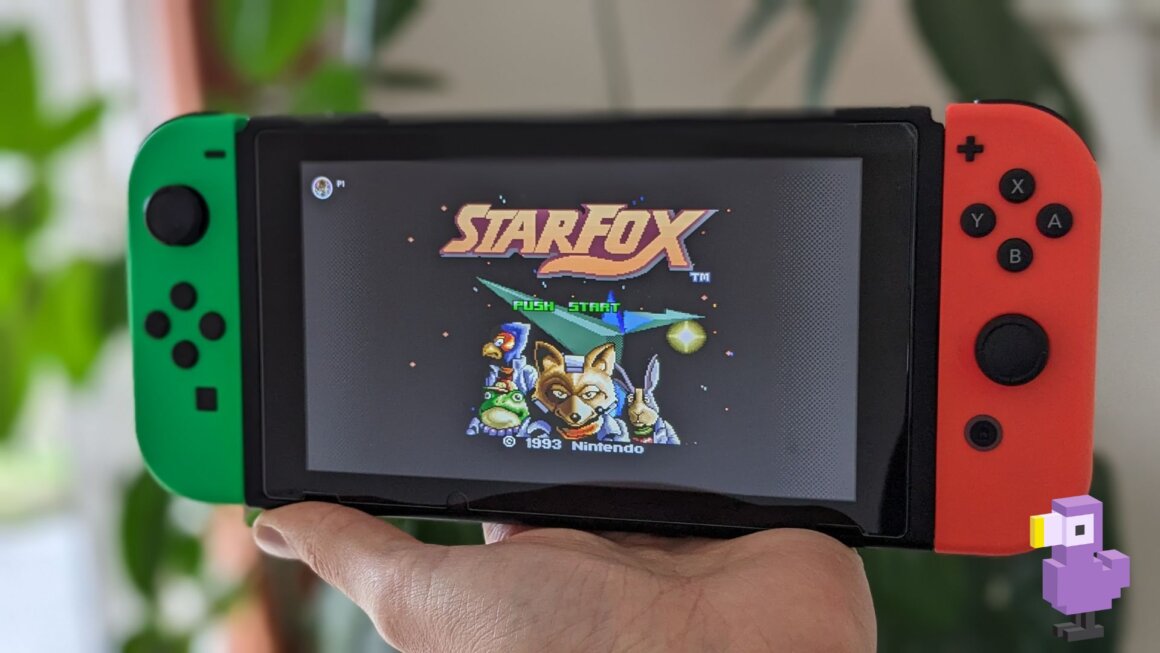
Retro Dodo: I’m a big fan of Star Fox, and you had quite a lot to do with the Super FX chip itself didn’t you Jez? You were instrumental in helping bring that out so we could actually play Star Fox which I’m very happy about because it’s one of my favourite games as a kid.
Jez: Yeah, we designed the SuperFX chip, which at the time was called the Mario chip. It stood for Mathematical Argonaut Rotation I.O. chip, input-output chip. And then Nintendo renamed it the SuperFX chip, and that stuck, obviously. And also we had just come off the back of doing Star Fox when we started Croc, so some of the learnings that we got out of that project fed into Croc. So having the, we call it the Strat language, but it’s the language that lets the designers make the behaviors of the creatures in the game. That was inherited… the idea was inherited from Star Fox, even though we did a new Strat language for Croc. And we also had an editor as well that we built a Croc-Ed with that allowed our designers to build the levels and so on. So, you know, it was the combined expertise of, you know, some very talented people and good timing that we had just done that project and then we’re ready to do crop.
Retro Dodo: Every Star Fox game that’s come out, I’ve always jumped on. But yeah, I used to play Star Fox as a kid with my uncle actually and I was a huge fan of Lylat Wars. So it’s nice that we get to do this and we get to talk about two games that Brandon and I have played a lot growing up
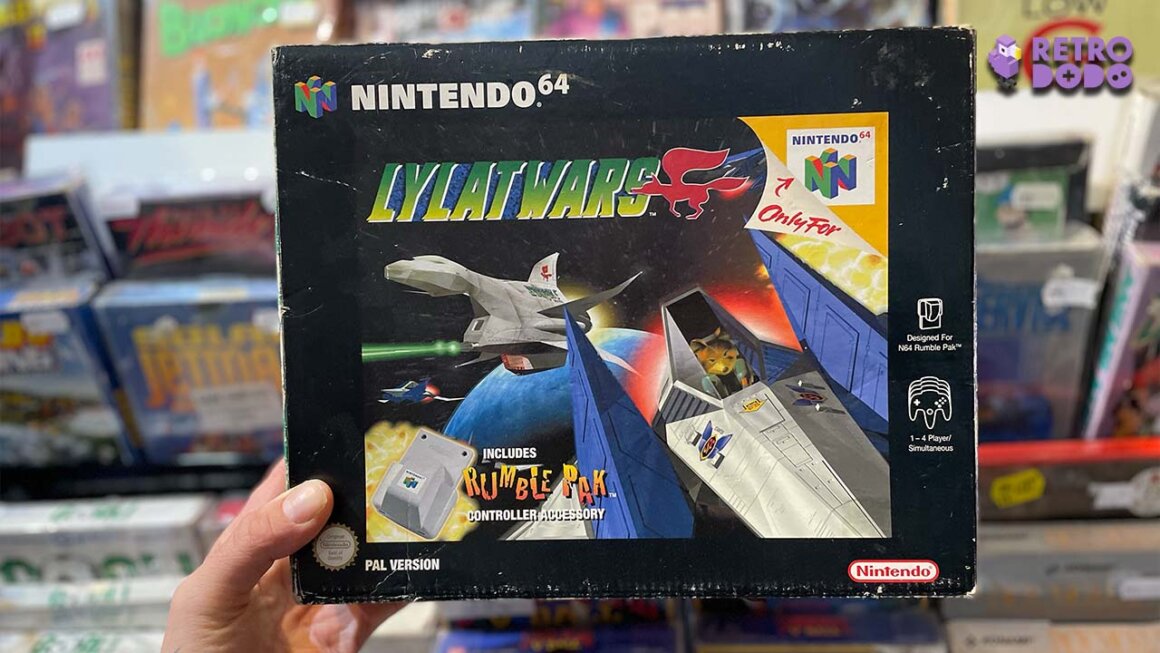
Jez: Funnily enough, there’s a mini anecdote about why it was called Lylat Wars in Europe. It was called Star Fox in Japan and it was called Star Fox in America. But there was a German company called Star Vox that I think must have been an audio company or something. And they threatened Nintendo and said, we’ve got the trademark, you can’t use Star Fox in Europe. They’re not spelled the same and in English, they’re not really pronounced the same either, but in German apparently they were. So it had to get renamed Lylat Wars.
The Croc Remaster & Future Plans
Retro Dodo: One thing that’s been on our minds for Croc’s return is ‘why now?’ We talk about this all the time and we’re obviously biased. We feel like retro is coming back; the target audience have a bit of money now. They’ve got kids that they want to show all their nostalgic memories to. Do you think the stars aligned, the market is very much retro-focused nowadays and it just felt right? Or was it a good financial investment right about now?
Jez: So that’s multiple answers, I guess. One is I always wanted to redo or revisit Croc, but the opportunity just wasn’t there. It wasn’t the right time. It was either not the right time for me because I didn’t have the money to invest in it, or it was, you know, like it’s just the market’s not ready for it. And then this retro market has become so big and people want to play the games that were really good, that were on older generation consoles that don’t exist anymore. And yes, sure, there’s an emulator scene. So there’s people who’ve been playing the games on an emulator, but it’s not the same. And it was also waiting for the right people to come along who actually wanted to invest a significant amount of time and energy into the project.
Retro Dodo: Jez, you definitely didn’t announce Croc 2 during our chat, I’m just going to say that again because Mike is shaking his head for anyone who’s not watching this interview on YouTube. We don’t have Croc 2 coming yet, but let’s talk about things you’d like to do in the coming months and years now that Argonaut’s back
Jez: So I would still, without announcing anything, I would say that we want to keep the team together and we want to move on to Croc 2 after Croc 1. But the market has to want it. The market has to appreciate Croc 1 and tell us that they want Croc 2. And then if they do, which hopefully they do, then we will do Crop 2. Is that fair, Mike?
Mike: I mean absolutely and we’ve said this publicly I think Jez has said it and we’ve you know repeated it that you know, we really would love for Croc to be a success and there are some hurdles for us as a small Indie game publisher, right? Like, you know, we’re not EA. We don’t have the clout that they have so we’re really hoping that the fans Are out there and they’ll help us.
Retro Dodo: We’ve read a lot about the controls in the new game and everyone’s thankful that they’ve got a modern upgrade. How was the development of that?
Jez: Back in the 90s we had the problem of the PlayStation analog joystick coming out like two weeks before we shipped the original game and Sony insisted that we support it. So we had to rush in analog support and then it wasn’t… we didn’t have the benefit of having loads of time to like experiment and you know, find out what the best possible way to control with an analog stick is. And so it was the best we could do. But obviously, now we know how to use analog sticks and we know how to make it much better.
Mike: It’s kind of crazy just to think about, know, here we were in 1997, and like there had never been really like a console with analog controllers. PlayStation 1 just had a D-pad. And so today it sounds like nothing. It’s like, oh, you know, every controller has little analog sticks on it. But like, yeah, I mean, you imagine the dev team is kind of like, ‘Oh, wow, okay, what do we do with this?’ Right. So they had two weeks. And so we talked about Croc. just were like, ‘OK, first thing we’ve got to fix the controls’, but it turns out the people wanted the old controls too, so that’s an original option you can choose in the new game.
Retro Dodo: Thanks again for joining us everyone, we’ve had a blast revisiting Gobbo Valley with you all. Do you know where the best place is to purchase that and for our readers to grab a copy?
Mike: Well you can still go to rocketgames.com, you can still pre-order the collector’s edition, the digital version at least. And, you know, very shortly you’ll be able to pre-order or order it on the PlayStation, Xbox, and Switch stores. So, you know, I’m not sure if we’ll be on any shelves, I don’t know if that’s still a thing, but you can get it digitally. You can actually buy a plush Gobbo as part of the collector’s edition. We had a pre-sale for this collector’s edition and we also have a t-shirt and a Gobbo plush; the never-before-available Gobbo plush!
Thanks very much to Argonaut Games for joining us for an interview about their return to the world of gaming and all things Croc! It was a pleasure to talk about one of our favorite games with the people who made it possible, and I hope you enjoyed learning about some of the processes involved with making the game. Don’t forget that you can listen back to the full episode using the player below to immerse yourself in even more Croc knowledge!